Letting Go Creates Expansion: What Surrender, Alignment, and Identity Shifts Actually Look Like
Season 2, Episode 14 — Solo Episode
RAW Season 2, Episode 14: Letting Go Creates Expansion: What Surrender, Alignment, and Identity Shifts Actually Look LikeThere are episodes that inform. And then there are episodes that unravel something.
This is the latter.
In this solo episode of RAW, Alison Hite shares one of the most personal updates she's brought to the podcast — a look at the internal transitions that are quietly reshaping her path, her business, and her sense of self. What she's discovered in the middle of it: letting go isn't loss. It's the prerequisite for everything that's meant to come next.
This episode is for anyone standing at the edge of a change they can feel coming but aren't quite ready to name. For anyone gripping something familiar while something bigger pulls at them. For anyone who's been busy — productively, impressively busy — and still knows something essential is missing.
What This Episode Is Really About
Ali opens up about what it means to go all in on your purpose — not the curated, highlight-reel version of it, but the actual experience of it: the fear, the identity unraveling, the uncertainty that doesn't have a clean resolution.
The through-line of this episode is the idea that letting go creates expansion — that the things we hold most tightly, the identities we've built for safety, the patterns we've inherited from childhood, the busyness we use as armor — are often the very things standing between us and the life we say we want.
She also shares a significant personal milestone: her decision to pursue her Integrative Health Practitioner certification, deepening her understanding of root-cause healing and bridging clean living with true health transformation.
In This Episode We Discuss
Letting Go as a Growth Strategy
Release is not passive. It is one of the most active, intentional things you can do. Ali explores how holding onto safety — whether that's a career identity, external validation, or a pattern that once protected you — creates a ceiling. Expansion, by definition, requires something to be released first.
Busyness Is Not the Same as Progress
One of the most uncomfortable truths in this episode: you can fill every hour with "productive" things and still be circling the same place. True progress comes from aligned action — the kind that moves toward something real — not from volume or output alone.
Emotional and Mental Detox
TheCheekyClean conversation has always included physical detox — clean ingredients, clean products, conscious consumption. This episode expands that framework. Stress, overthinking, control patterns, emotional suppression — these are just as toxic to the body as environmental exposures. Real detox is whole-person work.
The Stress–Disease Connection
Ali connects the dots between chronic stress and physical health, drawing on her own experience and the broader research on how unresolved emotional patterns manifest in the body. It's a powerful reminder that root-cause health always includes what's happening in the nervous system — not just what's on your plate.
Fear as a Signal
Fear doesn't always mean stop. Often, it means you're close to something that matters. Ali reframes fear as directional information — a sign that you're near the edge of your next level — rather than evidence that you should retreat.
Nervous System Regulation as Foundation
True resilience isn't the ability to push through anything. It's the capacity to stay grounded in uncertainty. Ali shares how nervous system regulation has become a core part of her own health practice — and why it's foundational for anyone building something meaningful while navigating real life.
Alignment Over Hustle
Inspired, intentional action outperforms scattered, forced effort — every time. This isn't a permission slip to do less. It's a reorientation toward doing what's actually connected to your purpose, rather than what's keeping you comfortable or busy.
Your Identity Cannot Be Your Career
One of the most resonant threads in this episode: when your sense of self is tied to what you do or how you're perceived, any shift in that threatens everything. Ali talks about the discomfort — and the necessity — of separating identity from career and rebuilding it around purpose instead.
Key Takeaways
Letting go is a growth strategy. Clinging to safety, validation, or outdated identities creates a ceiling. Expansion begins with release.
Busyness ≠ progress. Productive-looking activity can be its own form of avoidance. Aligned action is what actually moves things forward.
Detox is not just physical. Emotional patterns, stress, control, and overthinking are toxic loads the body carries too.
Fear is often a signal, not a stop sign. What scares you most is often pointing directly at your next level.
Alignment over hustle. Intentional, purpose-led action outperforms volume every time.
Nervous system regulation is foundational. Groundedness in uncertainty is the foundation of real resilience.
Community over virality. Deep, genuine connection will take you further than surface-level reach.
Your path doesn't have to look like anyone else's. Breaking from the linear model is uncomfortable — and necessary.
You don't need to rush the leap — but you do need to listen. When your soul nudges you, it's time to move.
Frequently Asked Questions
-
A: Letting go in personal growth means releasing attachment to identities, outcomes, relationships, or patterns that no longer serve your next stage — even when they feel safe or familiar. It is often the most essential and overlooked step in real expansion. Holding on too tightly to what feels safe can actively block new opportunities, relationships, and versions of yourself from emerging.
-
A: Chronic stress keeps the body in a prolonged fight-or-flight state, elevating cortisol and inflammatory markers over time. Unresolved emotional patterns — control, suppression, perfectionism — can contribute to hormonal disruption, immune dysregulation, digestive issues, and disease. Addressing emotional and mental health is part of any complete, root-cause approach to physical wellness.
-
A: Nervous system regulation is the capacity to move between activation and calm — staying grounded even under stress or uncertainty. A chronically dysregulated nervous system keeps the body in survival mode, affecting sleep, digestion, hormones, mood, and decision-making. Building regulation capacity through practices like breathwork, rest, and mindfulness is foundational for long-term health and resilience.
-
A: An Integrative Health Practitioner is trained in root-cause health approaches that address the whole person — nutrition, lifestyle, emotional health, environment, and mindset — drawing from both conventional and functional health principles. The IHP certification is increasingly recognized as a bridge between clean living, conscious consumption, and deeper clinical health support.
-
A: Letting go is usually the right move when you notice you're holding something for safety, fear, or familiarity rather than genuine alignment. Signs include persistent low-level anxiety, resentment, stagnation, or the feeling that something is pulling you elsewhere. The things we grip most tightly are often the ones blocking our next level.
-
A: Busyness is high output that often circles the same place — it looks and feels productive but doesn't move you meaningfully forward. Aligned action is intentional effort connected to your actual purpose or vision. The difference is directional: one fills time, the other builds something.
-
A: Physical detox focuses on removing toxic inputs — processed food, chemicals, environmental exposures. Emotional detox addresses the inner load: unresolved stress, control patterns, suppressed feelings, and chronic overthinking. Both create toxic burden in the body. A complete wellness approach recognizes that emotional and mental patterns are as significant to long-term health as what you eat or put on your skin.
This one is personal, honest, and worth your full attention.
Listen to the full episode on Spotify or Apple Podcasts, and watch on YouTube.
Related Episodes
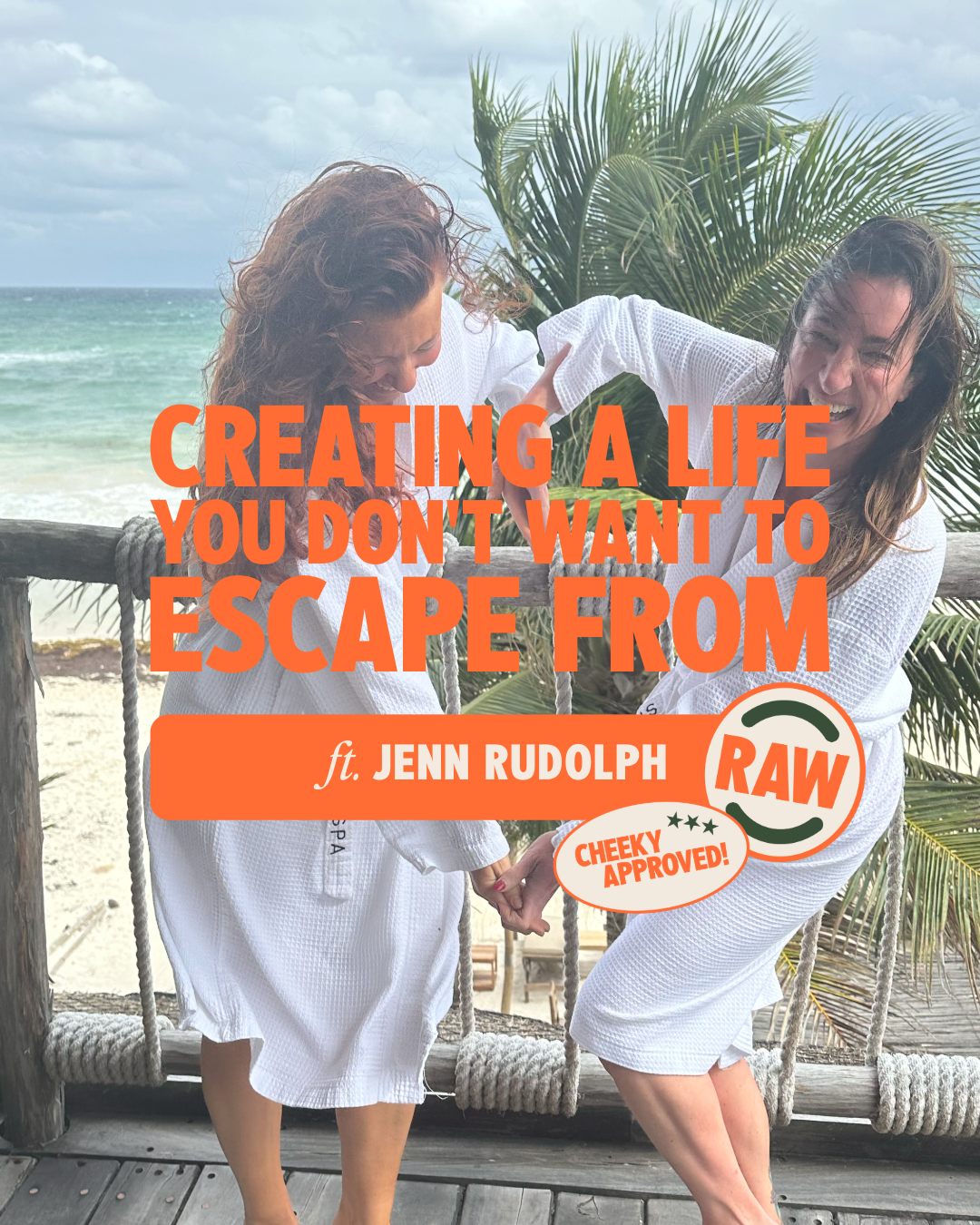
S2 E04 — Creating a Life You Don't Want to Escape From ft. Jen Rudolph
Both episodes explore what it actually means to build a life in alignment with who you are, not just what looks good on paper.

S1 E17 — The Best Rx Is Advocating for Yourself
Another solo episode where Ali connects personal health advocacy, identity, and the courage to choose a different path. Strong companion to this episode's root-cause emotional health themes.

S1 E10 — Shifting Realities: A Journey Through the Pillars of Growth
Ali's earlier solo episode on personal transformation — a natural starting point for listeners who want context on how her thinking has evolved through Season 2.